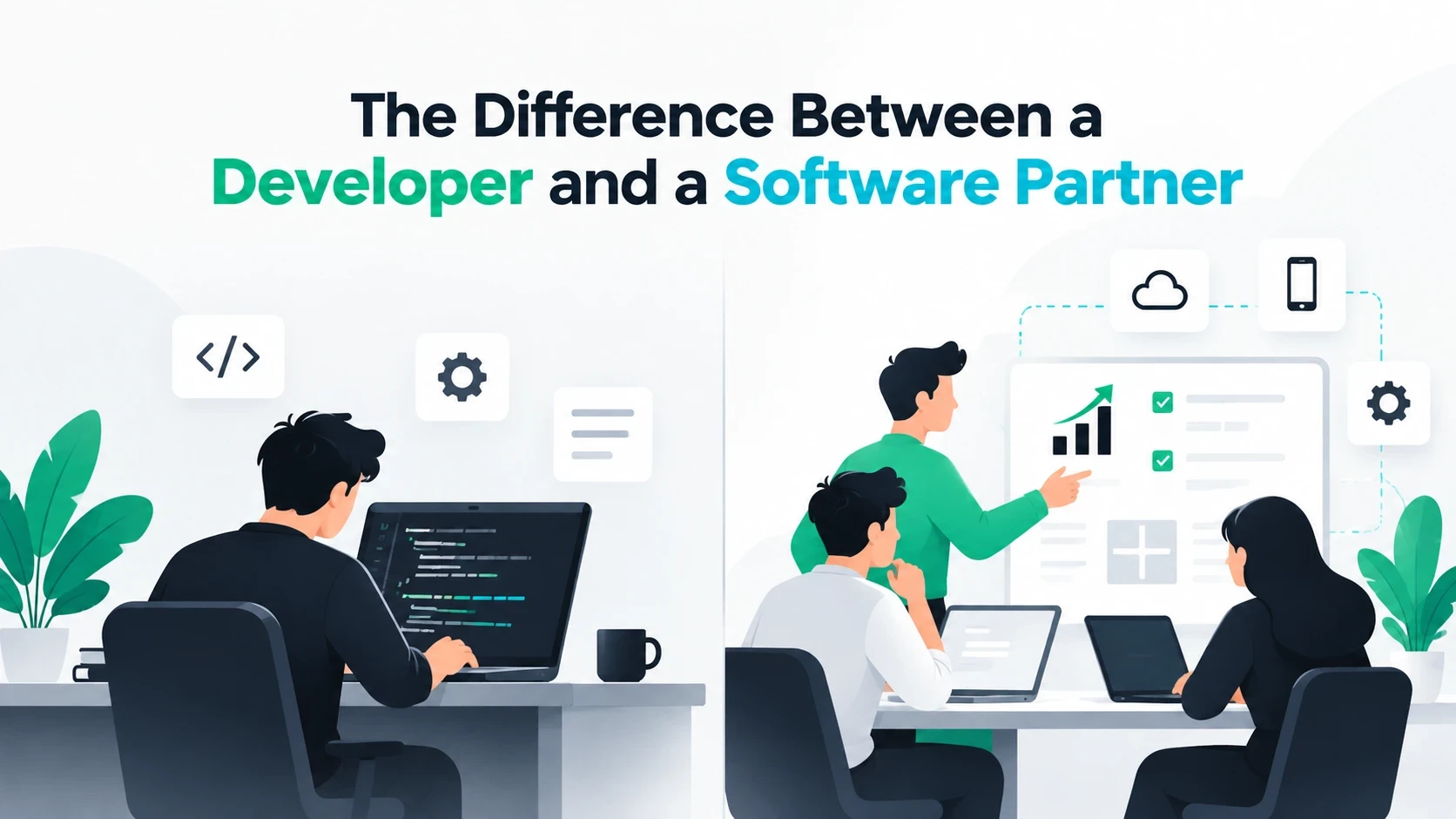
The Difference Between a Developer and a Software Partner
When a business decides it needs custom software, the first instinct is often to find a developer.
This is natural. Software is built by developers. If you need software, you need someone who can write code.
But there is a significant difference between hiring a developer and working with a software partner — and businesses that confuse the two often end up frustrated, over budget, and with software that does not solve their actual problem.
What a Developer Does
A developer's job is to write code. They take instructions — usually a specification, a wireframe, or a brief — and translate them into working software.
A good developer is technically skilled, writes clean code, and delivers what they are asked to build. They are responsible for the quality of the technical implementation.
What a developer is typically not responsible for is whether the thing they built is the right thing to build. That is the client's job. The client brings the requirements. The developer builds them.
This division of responsibility works well when the client knows exactly what they need — when the business has already figured out the right solution and simply needs someone to implement it technically.
It works poorly when the business knows it has a problem but has not yet figured out the right solution. In that case, the developer builds what they are told — and the client discovers later that what they asked for and what they needed were different things.
What a Software Partner Does
A software partner's engagement begins before any code is written.
The first conversation is not about technical specifications. It is about the business problem. What is the process? Where is it breaking down? What does the business need the software to achieve? What does success actually look like?
From that conversation, a software partner helps the business define the right solution — not just implement the requested one. They ask the questions that surface the edge cases, the unstated requirements, and the parts of the process the business may not have thought to mention.
They push back when the proposed approach has problems. They suggest alternatives when a better solution exists. They flag risks before they become expensive problems.
And when the software is built and deployed, they are invested in whether it actually works — not just whether it was technically completed.
How to Tell the Difference in a Conversation
A developer asked "what do you need?" will typically ask clarifying questions about the features and start talking about technical implementation.
A software partner asked the same question will ask about the business problem first. What process is this supporting? Who uses it? What is broken about the current approach? What does the team actually need to be able to do?
The questions a development partner asks early in the engagement reveal whether they are thinking about your business outcome or just the technical scope.
When Each Makes Sense
Hiring a developer makes sense when you have already done the work of defining exactly what you need — when the requirements are clear, the process is mapped, and you need someone with the technical skills to implement it.
Working with a software partner makes sense when you know you have a problem that software should solve, but you need help defining what that solution should look like. Or when the stakes are high enough that getting the requirements right is as important as executing them technically.
For most business software projects — where the process is complex, the requirements are not fully defined, and the outcome matters — a software partner is the more appropriate relationship.
The Cost of Getting This Wrong
Businesses that hire developers when they need partners often discover the problem late. The software is built. The invoice is paid. And then the team starts using it and realizes it does not quite handle the way their process actually works.
Revisions are needed. Sometimes significant ones. The developer implemented exactly what they were asked to implement — but the business did not know the right questions to ask, and nobody was responsible for asking them.
The cost of that discovery is always higher than the cost of doing the thinking properly upfront.
At NEOQOM, we operate as software partners. Our first investment in every project is in understanding the business — the process, the problem, and what the right solution actually is. The technical work comes after that understanding is established.
The right developer builds what you ask for. The right partner helps you figure out what to ask for. For most business software projects, that distinction is worth a great deal.
NEOQOM — Software partnership for businesses that want the right solution, not just a delivered specification.